

You’re brushing your child’s teeth one evening, and suddenly you notice it—a shiny, metallic little tooth peeking back at you. You might pause and wonder,
“What is a silver tooth kid?”
If that thought has crossed your mind, you’re not alone.
For many parents, spotting a silver tooth on their child comes as a surprise. It’s not always something you expect to see on a little one, and it can raise all kinds of questions: Why is it there? Is it safe? Does it mean my child has bad teeth?
This guide will walk you through everything you need to know—from what these silver caps really are, to why dentists use them, and how they protect your child’s smile in the long run.
Defining the Silver Tooth: More Than Just a Cap
The Technical Terminology
The shiny “silver tooth” you see is actually called a preformed stainless steel crown (SSC). In simple terms, it’s a type of pediatric dental crown designed specifically for children. Dentists often place it as a silver cap on a child’s tooth when the tooth is too damaged for a filling but still important enough to keep.
Other names you might hear include:
- Stainless steel crown baby tooth
- Baby tooth crown
- Child tooth cap
- Children’s dental crown
Why a Child Has a Silver Tooth
If you’ve ever asked yourself, “why does my kid have a silver tooth?”, the answer is usually straightforward: it’s one of the most effective ways to restore a damaged baby tooth and keep it healthy until it naturally falls out.
Think of it this way: the silver tooth meaning child simply reflects that your child had a dental issue—like a large cavity—and the dentist chose to protect the tooth instead of removing it. Keeping that tooth helps maintain proper spacing in the mouth, which is critical for permanent teeth to grow in correctly.
The Purpose and Procedure of a Children’s Dental Crown
Protecting Damaged Teeth
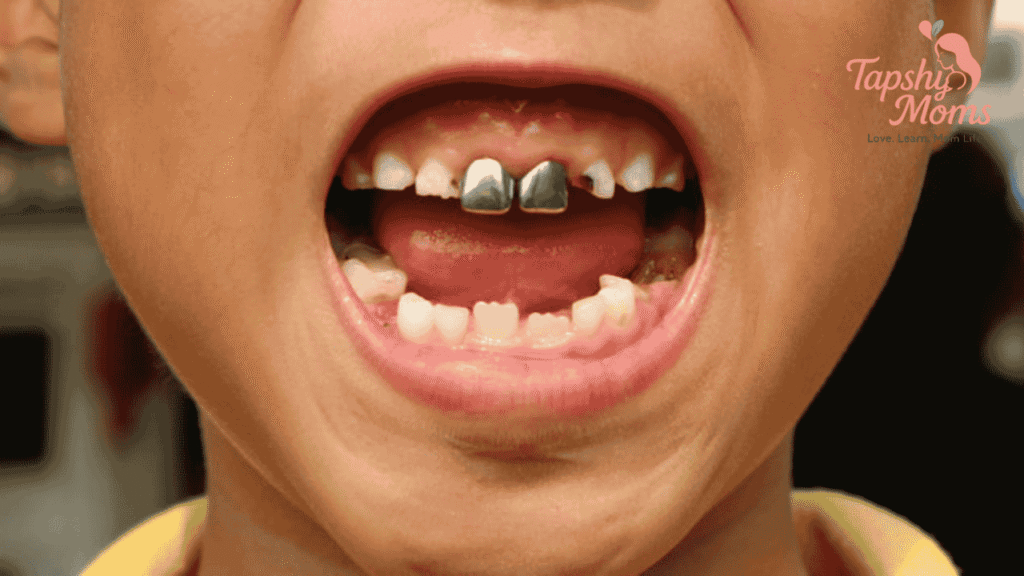
The main reason for placing a silver cap is to restore a damaged baby tooth and protect it from further decay. This is especially important in cases of extensive caries management, where the tooth is too weak to hold a regular filling.
Silver crowns are durable, inexpensive, and reliable. They give children the best chance to keep their natural teeth functioning until the adult ones are ready to come in.
After a Cavity or Root Canal
Your child may need a crown in different situations:
- Dental crown for tooth decay in children: If a cavity is very large and a simple filling isn’t strong enough.
- After a baby root canal: Sometimes called a pulpotomy crown, it protects the baby tooth after pulp therapy—a procedure that removes infected tissue inside the tooth.
- Tooth crown for kids after cavity: In cases where the tooth structure is weakened and at risk of breaking.
The Procedure Simplified
Hearing the words “crown procedure” can sound intimidating, but the children’s tooth crown procedure is usually simple and stress-free. A pediatric dentist will numb the area with local anesthetic so your child doesn’t feel pain. Then, the tooth is cleaned, shaped, and fitted with a crown that’s pre-sized to match children’s teeth.
Most of the time, the crown is placed in a single visit, and children adapt quickly—they often forget about it within a day or two.
Common Parental Concerns and Questions
Safety and Durability
One of the most common questions is: “are stainless steel crowns safe for children?” The answer is yes. They’ve been used in children’s dentistry for decades and are considered a safe, strong, and effective solution for young patients.
Care and Lifespan
Parents often ask: “how long does a silver cap stay on?” The crown will usually remain until the silver crown on baby tooth naturally falls out with the rest of the tooth.
Care for a child’s silver tooth is straightforward—just brush and floss as you would with any other tooth. If the crown ever loosens or feels wobbly, contact your dentist for advice.
Cost and Alternatives
The cost of pediatric stainless steel crown depends on factors like location, dental insurance, and whether the procedure involves sedation. While costs vary, stainless steel crowns are typically more affordable than other options.
For parents who prefer a more natural look, there are alternatives to silver crowns for kids such as tooth-colored white zirconia crowns. These are more aesthetic but also more expensive.
The Broader Context of Children’s Dental Health
Importance of Primary Teeth
It can be easy to think, “They’re just baby teeth, so does it matter?” The truth is, primary teeth play a big role. They help your child chew, speak clearly, and act as guides for permanent teeth. Removing them too early can lead to misalignment and even require a space maintainer later.
Prevention is Key
The best way to avoid silver crowns is prevention. Start with a first dentist visit by age one and keep up with routine checkups. Here are some tips for preventing cavities in kids:
- Limit sugary snacks and drinks.
- Encourage daily brushing with fluoride toothpaste.
- Teach flossing once teeth touch.
- Address baby tooth cavities early, before they become bigger problems.
By practicing good oral hygiene, you can also reduce the risk of early childhood caries, which is a leading cause of silver crowns.
The Role of the Pediatric Dentist
A pediatric dentist specializes in caring for children’s teeth and knows how to make the experience comfortable and positive. From performing a primary tooth restoration to explaining care instructions in kid-friendly ways, their expertise is invaluable for maintaining children’s dental health.
Conclusion: A Small Crown, A Big Impact
So, what does it mean when your child has a silver tooth? It means their dentist took an important step to protect their smile. A silver crown is:
- A safe and proven solution for children.
- A way to prevent bigger problems down the road.
- A sign that you and your dentist are working together to support your child’s long-term dental health.
While the shiny silver cap may stand out now, what matters most is the strong, healthy teeth it helps protect. Think of it as a small crown making a big impact.
Next step? Keep up with regular checkups, encourage healthy habits, and if you have any concerns, never hesitate to ask your dentist. You’re not just taking care of teeth—you’re building lifelong confidence in your child’s smile.