

When you first hold your Newborns, it’s easy to see them as a tiny, fragile being who depends on you for absolutely everything. But the truth is, babies arrive with a toolkit of innate newborn behaviors designed to help them survive, connect, and thrive. These amazing baby abilities are both fascinating and heartwarming—tiny reminders that your little one is far more capable than they may seem.
In this article, we’ll uncover 6 things you may not know your baby can do, from instinctive reflexes to surprising sensory skills. Understanding these baby development facts will not only amaze you but also deepen your bond as you learn to read and respond to your child’s cues.
1. The Power of Touch: The Surprising Grasping and Stepping Reflexes
The Palmar Grasp: Why They Grab Your Finger So Tightly
One of the most charming newborn reflexes is the grasping reflex, also called the palmar grasp. If you gently place your finger in your baby’s palm, you’ll notice their tiny fingers curl around it in a surprisingly strong hold.
Parents often ask, “Why do newborns grab your finger?” The answer is simple: it’s an infant instinct, not a conscious choice. This grip is a primitive survival behavior, helping babies cling to their caregivers in early human history. Over time, it also lays the groundwork for motor skills like voluntary grasping.
The Stepping Reflex: Are They Already Trying to Walk?
Another unexpected newborn skill is the stepping reflex. Hold your baby upright with their feet touching a flat surface, and you may see them make walking-like movements. This doesn’t mean your baby is ready to walk, of course. It’s simply a temporary reflex in early infancy, usually fading within the first two months. Still, it’s one of those surprising things babies can do that leaves first-time parents in awe.
2. A Built-In GPS: The Instincts That Guide Them to Food
The Rooting and Sucking Reflex: Finding Food Instinctively
If you gently stroke your baby’s cheek, they’ll turn their head and open their mouth in search of food. This is the rooting reflex, which works hand in hand with the sucking reflex—their natural urge to suck on anything placed in their mouth.
Together, these baby’s natural talents make feeding possible right from birth. They’re also the reason your newborn can latch even before you’ve learned all the ins and outs of positioning.
Breastfeeding Instincts from Day One
Beyond reflexes, babies have powerful breastfeeding instincts. For example, when placed on their mother’s chest, some newborns will “crawl” toward the breast to feed—a remarkable behavior that shows how deeply wired this drive is.
Parents often wonder, “How do babies know how to breastfeed?” It’s simply an instinct—they are born prepared. Knowing this can provide reassurance for those early, sometimes overwhelming, feeding sessions. For extra guidance, always seek pediatrician advice or consult a lactation consultant for personalized newborn parenting tips.
3. Their Amazing Senses: The Power of Smell and Sound
Newborn Sense of Smell: Recognizing You
Your baby’s newborn sense of smell is incredibly sharp. Within days, they can distinguish their mother by scent alone. This ability plays a key role in bonding with your baby, guiding them to nourishment and providing comfort. It’s one of the most amazing facts about babies, and a testament to how nature ensures survival.
The Ability to Hear: Do They Recognize Their Mother’s Voice?
“Can newborns recognize their mother?”
Absolutely. Long before birth, babies hear sounds in the womb, especially their mother’s voice. Once born, this familiar sound becomes a source of calm and security. This ability supports cognitive development and builds the foundation for language and communication.
4. An Early Warning System: The Startle Reflex
What is the Moro Reflex (Startle Reflex)?
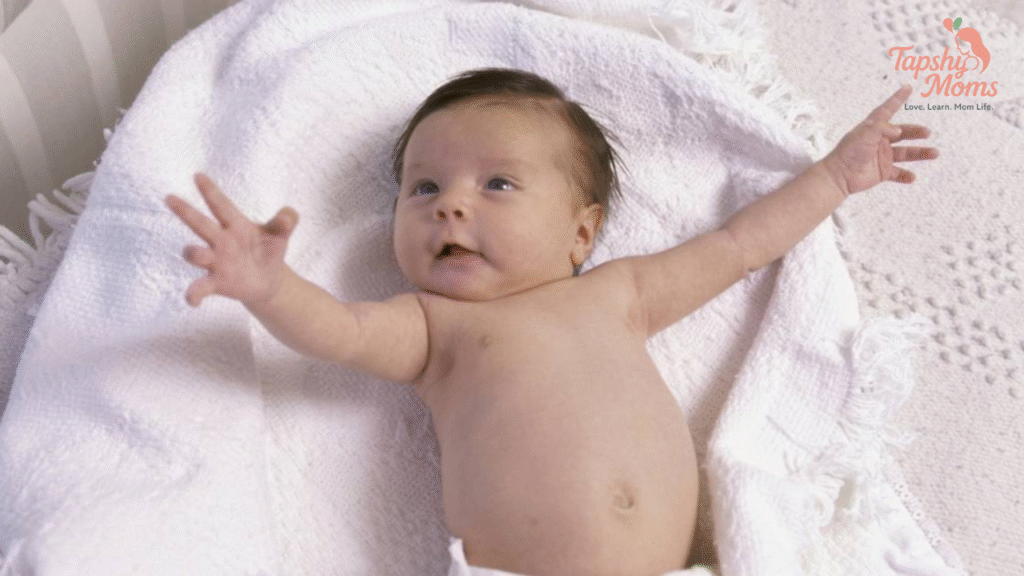
If your baby suddenly flings their arms wide, then quickly pulls them back, you’ve witnessed the Moro reflex, also known as the startle reflex. This involuntary reaction is often triggered by a loud noise, sudden movement, or a sense of falling.
Parents sometimes ask, “is this normal for a newborn?” The answer is yes. This reflex is a protective mechanism and an important sign of healthy infant development. In fact, doctors check it as part of newborn development milestones during those first visits, making it a reassuring marker for both you and your pediatrician.
5. Communicating Without Words: Early Social Behavior
Baby Mimicking Faces: A Sign of Connection
Even in postpartum days, babies demonstrate infant communication cues. One of the most delightful is baby mimicking faces. Around a few weeks old, some newborns may copy simple expressions like sticking out their tongue or opening their mouth.
This is more than cute—it’s a stepping stone in cognitive development and a way of practicing social interaction. Watching your baby engage this way is one of those things no one tells you about newborns, but it’s deeply meaningful for parent-child bonding.
From Crying to Cues: Understanding Your Newborn’s Language
Your baby may not have words yet, but they have plenty to say. Different cries, facial expressions, and movements are all infant communication cues. Learning to distinguish a hunger cry from a discomfort cry, for example, makes newborn care smoother and strengthens trust between you and your little one.
These subtle signals are your baby’s way of answering the question, “What can a newborn do?” They may not speak, but they are already capable of telling you exactly what they need.
Conclusion: Appreciating the Little Things
When you step back and observe, it’s clear that newborns are born with incredible baby’s natural talents—from instinctive reflexes to sharp senses. These are the 6 things you may not know your baby can do, and each one is both practical for survival and deeply touching for parents to witness.
These amazing facts about babies remind us that even in their smallest form, they are capable, resilient, and ready to connect. Cherishing these surprising facts about newborn babies can transform daily care into moments of wonder.
If you ever have concerns about your baby’s reflexes or behaviors, seek pediatrician advice. Every baby is unique, and having professional reassurance is always worthwhile.
Frequently Asked Questions
What reflexes should a newborn have?
Newborns typically demonstrate the rooting, sucking, grasping, stepping, and Moro reflex (startle reflex).
Are babies born with instincts?
Yes, they arrive with strong infant instincts like rooting, sucking, and holding on—all essential survival tools.
What amazing things can babies do?
From baby mimicking faces to recognizing their mother’s scent and voice, newborns show unexpected newborn skills every day.
How do babies know how to breastfeed?
They are guided by breastfeeding instincts and reflexes that naturally direct them toward the breast.
What are some surprising facts about newborn babies?
They can crawl to the breast after birth, distinguish scents, and demonstrate innate newborn behaviors that amaze even seasoned parents.
Can newborns recognize their mother?
Yes, they can recognize her voice and scent—familiar comforts that promote attachment during early infancy.