
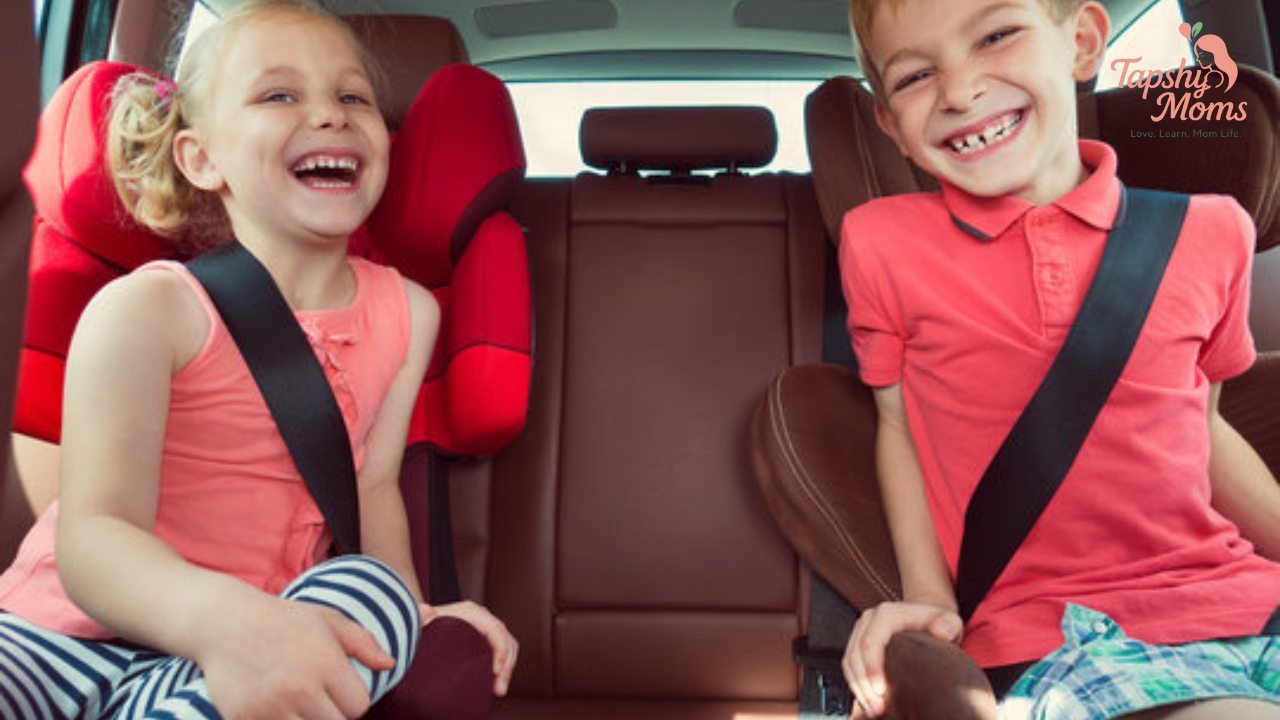
The moment the engine turns over, a familiar dread often settles in: the long stretch of highway ahead, punctuated only by the inevitable whine of “I’m bored” in the car. It’s a battle every parent knows well. In the face of a four-hour drive, the path of least resistance—handing over a tablet—is incredibly tempting. After all, screens provide instant backseat entertainment, offering a few precious moments of silence. But in our quest for peace, we often miss a profound opportunity.
The default reliance on tablets and movies, while convenient, bypasses the chance for true engagement. That’s why we’re pivoting to the massive benefit of unplugged car games and reducing screen time for kids on road trips.
Our goal here is simple: to provide the definitive list of engaging Screen-Free Car Games for Kids that turn travel time into quality family bonding on road trips. You don’t need fancy gadgets or complicated setups. These are all genuine no-prep activities for parents and incredibly effective car ride boredom busters. We promise a comprehensive guide to travel games for children of all ages, proving that fun without movies in the car is not only possible but infinitely better.
The Power of “Unplugged”: Why Go Screen-Free?
Choosing to put the tablet away is about more than just limiting blue light exposure; it’s about activating your child’s brain and helping them interact with the world around them.
Boosting Observation and Creativity
Screens are passive; the world outside your car window is not. Analog travel games force kids to look up and engage with the scenery, signs, and other vehicles, unlike passive screens. This active looking is fantastic for boosting observation skills. Instead of zoning out, your child is actively searching for specific colors, animals, or objects, turning the entire journey into a scavenger hunt.
Furthermore, imagination-based games and storytelling games are the ultimate workout for the mind, naturally encouraging creativity in children and fostering imagination. Creating a narrative with others requires immediate, active thought and decision-making, providing far greater mental stimulation for children than simply watching a pre-programmed video.
Language, Vocabulary, and Social Skills
The confines of the car, believe it or not, can become a fantastic classroom. Verbal car games significantly improve a child’s linguistic abilities. Games focused on word association or categories put a specific focus on improving vocabulary and language through fun, contextual play—a much better method than rote memorization.
These games also teach critical social skills. The confined space necessitates cooperative play for kids, teaching vital skills like turn-taking, active listening, and sharing the spotlight. Mastering the rules and flow of a verbal game is a great resource for parents who are wondering how to limit screen time on road trips and introduce a positive, interactive alternative.
Imagination-Based & Verbal Classics: Games with No Materials
The best no-prep car games are the simplest—the ones that only require your voice and imagination. This section focuses on games you can play with just your voice.
Observation and Quick-Thinking Games
I Spy: The classic for a reason! For games for toddlers in car and preschoolers, keep it simple with colors (“I spy something red”). For older kids, you can advance the game by using letters (“I spy something that starts with the letter ‘P'”) or specific categories (“I spy a type of flower”).
Spot the Yellow Car (Slug Bug/Punch Buggy): This is the classic, exciting way to keep kids occupied and alert to the road. You must discuss setting “house rules” upfront to keep it friendly and ensure the gentle “punch” is only on the arm and very light—or perhaps replace the punch with a simple point and a cheer!
The License Plate Game: A versatile choice for long distance travel with children. You can make it as complex as you like. Beginners can focus on spotting all 26 letters of the alphabet in order on signs and plates. Advanced players can try to spot plates from different states or try to make a word from the three-letter combination on a plate.
The Alphabet Game: Detail different variations for various age groups. For activities for preschoolers on road trips, focus on finding letters in signs or billboards. For games for elementary school kids, players must name an object outside the car that starts with the next letter of the alphabet (e.g., A for Ambulance, B for Bridge, C for Car).
Storytelling and Narrative Games
Storytelling Games (Collaborative Story): The “one sentence at a time” method is a hilarious way to build a wild story together. One person starts with a single sentence, the next person adds one, and so on. The goal is to build a narrative arc that gets more ridiculous with every turn.
The Picnic Game (I’m going on a picnic and I’m bringing…): A classic memory and recall game. The first person says an item they are bringing, and the next person repeats the first item and adds their own. It gets progressively harder and funnier!
20 Questions: A fantastic game for improving deduction and question-forming skills. One person thinks of an object (person, place, or thing), and the others have up to 20 “yes or no” questions to guess it.
Name that Tune (Humming/Singing): Simple old-school car games for all ages, promoting fun and musical memory. One person hums or sings a few bars of a song, and the others try to guess the title and artist.
Decision & Debate Games: The Best for Older Kids
When you’re occupying kids in the backseat who need a deeper challenge than simply spotting colors, these games are perfect for tackling the “I’m bored” in the car complaints from older children. They engage critical thinking and humor.
Logic and Hypothetical Scenarios
Would You Rather?: This game is simple but powerful. Explain how to make the questions age-appropriate—from silly choices (e.g., “Would you rather have a nose that lights up or ears that flap?”) to more philosophical ones for teens (e.g., “Would you rather have infinite time or infinite money?”).
Two Truths and a Lie: A great icebreaker and a fun way to share facts about yourself (or pretend facts) with a catch. Each player makes three statements—two must be true, and one a lie—and the others must guess the false one.
The Categorizer/The Listing Game: Name as many items as possible in a specific category. Set a time limit for a fun challenge. Categories could include dog breeds, US cities, things that are red, types of food, or video game characters.
Memory and Association Challenges
The Adjective Game: One player chooses a single object in the car (e.g., the seatbelt). Each player then takes a turn describing it using a new, unique adjective. For example: “The seatbelt is black,” then “The seatbelt is safe,” then “The seatbelt is woven.”
The Association Train: Starting with one word, the next person says a word immediately associated with it, creating a chain. For example, dog $\rightarrow$ bone $\rightarrow$ dinosaur $\rightarrow$ T-Rex $\rightarrow$ museum $\rightarrow$ painting. This game is excellent for mental agility.
Simple Supplies, Big Fun: Pen, Paper, and Printables
While the verbal games are wonderful, sometimes a bit of visual or tactical stimulation is needed. This section covers car ride activities that require minimal materials, addressing the pen and paper car games segment.
Ready-to-Play Games
Car Bingo: Recommend printable travel games templates beforehand. You can find templates online with squares for common sights (a cow, a semi-truck, a speed limit sign, etc.).
Tic-Tac-Toe: The classic two-player game is perfect for a quick round. For more players, you can use a round-robin style or have a tournament.
Hangman (Travel Version): A vocabulary-boosting game, the travel version works best with a clipboard or a small dry-erase/magnetic board to keep the game in one place without pieces scattering.
Dots and Boxes: Another great two-player paper game that requires strategy. Players take turns drawing lines between dots, trying to complete a square (box) with their initial, scoring a point.
Mad Libs (for car rides): Bring pre-printed books or print out a few sheets before you go. This hilarious game is a simple way to practice parts of speech while generating silly, memorable stories.
Creating a “No-Prep” Kit
Don’t forget to gather summer road trip essentials beyond just snacks and drinks. The key to making these no-prep car games work is having a dedicated kit ready to go.
The advice is simple: create a small pouch or pencil case with a clipboard, pens, markers, a small pad of paper, and a few Mad Libs booklets. By having this DIY travel kit for kids ready, you’re making these no-prep activities for parents a grab-and-go reality.
Conclusion: Making Memories on the Move
We’ve covered a wide range of Screen Free Car Games for Kids, from purely verbal backseat entertainment to simple pen and paper car games. These alternatives to tablets in the car are more than just ways to pass the time; they are tools for connection.
The key takeaway is that these games are invaluable for keeping kids entertained on long drives and fostering true family bonding on road trips. You are trading silent, solitary consumption for shared laughter, learning, and interaction.
We challenge you to ditch the alternatives to tablets in the car for your next journey and see the positive difference. You’ll be surprised at the memories you create just by putting the screens away.
Which old-school car games do you plan to try first, and what’s your favorite to share with others?
FAQs: Your Road Trip Questions Answered
What are the best verbal screen-free car games for toddlers and preschoolers?
For games for toddlers in car and activities for preschoolers on road trips, the simplest verbal games are best. I Spy (using only colors), singing songs, and simple Name that Tune are ideal. You can also play The Picnic Game but keep the list short and the pace slow.
How can I prepare for a long road trip using only no-prep car games?
To be ready for long distance travel with children using only no-prep car games, focus on memorizing the rules for four to five core verbal games (I Spy, 20 Questions, The Alphabet Game, Would You Rather?). For the simple supply games, pre-assemble a small DIY travel kit for kids with a clipboard, paper, and pens, and keep it in the car—that’s all the prep you need!
Are there any educational screen-free car games that improve vocabulary?
Absolutely! The Alphabet Game (finding objects or signs that start with the next letter) is fantastic for letter recognition and vocabulary. 20 Questions and Hangman are both excellent for improving vocabulary and language by forcing kids to think critically about descriptive words and categories.
What are some effective car ride boredom busters that are not I Spy?
While I Spy is a classic, other great car ride boredom busters and alternatives to tablets in the car include Would You Rather?, The License Plate Game, and collaborative Storytelling Games. These games require more active thought and are a great way of engaging kids without electronics.
How do you play the classic License Plate Game with kids?
The simplest version of the classic travel games for children is to challenge players to find all 50 US states on license plates. A variation for all ages is the Alphabet Race: The first person to spot all 26 letters of the alphabet, in order, on signs, billboards, or license plates wins.
What is the best way to transition kids from tablets to screen-free car games?
The best way to address how to limit screen time on road trips is through a gentle transition. Start with the screen-free games first—perhaps for the first hour of the trip. Make the screen-free car games for kids so fun and engaging that they forget to ask for the tablet. Frame the switch as a special activity you can only do together, emphasizing the family bonding on road trips.