
Navigating your child’s diet during the preschool years can feel like a challenge. As they grow and their appetites fluctuate, it’s natural to wonder if they’re getting everything they need. Understanding the nutritional requirements for 3-5 year olds is a crucial step in setting them up for a lifetime of good health.
This article breaks down the essential nutrients for children, provides practical feeding strategies, and offers solutions for even the pickiest eaters—all while keeping you supported on your parenting journey.
The Building Blocks: Essential Nutrients for Preschoolers
A balanced diet for 3-5 year olds is the foundation of healthy growth. Preschoolers are active, curious, and developing rapidly, which means their bodies need a steady supply of fuel and nutrients.
Macronutrients: Fueling Their Growth
- Protein sources for preschoolers: Protein supports muscle growth, tissue repair, and immunity. Foods like eggs, lean meats, beans, lentils, and yogurt are excellent choices. Many parents wonder, “How much protein does a 5-year-old need daily?” On average, about 13–19 grams a day is sufficient.
- Whole grains for children: Carbohydrates are their main energy source, and whole grains like oats, brown rice, and whole wheat bread provide fiber to support digestion.
- Healthy fats for brain development: Avocados, nut butters, and fatty fish help with memory, focus, and overall brain development nutrition.
- Daily food intake for toddlers: A 3-year-old may need 1,000–1,400 calories, while a 5-year-old might require closer to 1,400–1,600, depending on activity level. These calories should come from a mix of macronutrients.
Micronutrients: Vital for Development
Micronutrients may be small, but they play a big role in preschooler nutrition needs.
- Calcium-rich foods for kids: Essential for strong bones and teeth. Dairy, fortified non-dairy milk, tofu, and leafy greens are great options. For those avoiding dairy, parents often ask, “Best calcium sources for dairy-free preschoolers?”—fortified cereals, beans, and sesame seeds are excellent.
- Iron requirements for toddlers: Iron helps prevent anemia and supports brain health. Red meat, spinach, lentils, and fortified cereals are great choices. Parents may worry about “Signs your child isn’t getting enough iron”—these include fatigue, pale skin, or frequent illness.
- Micronutrients for child development: Vitamins A, C, and D play roles in vision, immune support, and bone growth.
Practical Strategies for Feeding Young Children
Beyond knowing what to serve, feeding strategies for kids can make all the difference in encouraging them to eat well.
Meal Planning & Portion Sizes
Creating a preschooler meal plan helps keep food balanced and stress-free. Here’s a breakdown:
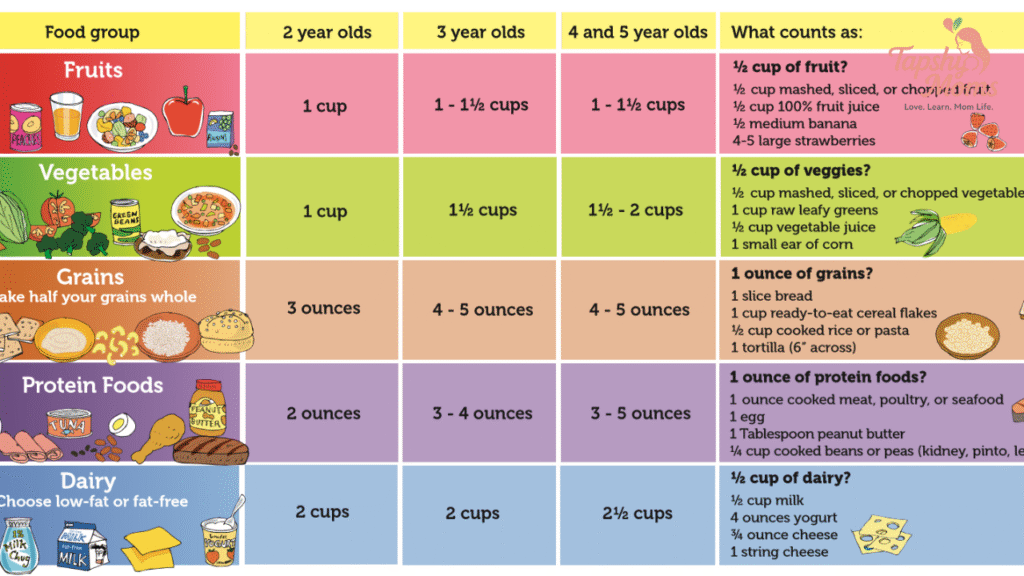
- Portion sizes for 4 year olds: Use your child’s hand as a guide—a fist-sized portion of grains, palm-sized protein, and two handfuls of fruits or veggies per meal.
- The food pyramid for preschoolers shows the importance of variety—fruits, vegetables, grains, proteins, and dairy (or alternatives) every day.
Making Snacking Healthy
Snack time is a big opportunity for nutrition.
- Healthy snacks for 3-5 year olds can include apple slices with nut butter, yogurt with berries, or cheese cubes with whole-grain crackers.
- Parents often ask: “Healthy snack ideas for 3-year-olds that they’ll actually eat?” Try smoothies, veggie muffins, or fruit skewers for fun and appeal.
- Choose healthy alternatives to junk food, such as popcorn over chips or homemade frozen yogurt pops instead of ice cream.
Dealing with Picky Eaters and Mealtime Battles
It’s common for children in this age group to resist new foods. Approaching these challenges with patience can help build healthy eating for young children.
Understanding Picky Eating
Picky eating is often part of early childhood nutrition.
- Feeding fussy toddlers may involve repeated exposure to the same food—sometimes 10 or more times—before they accept it.
- If you’re facing dealing with food aversions or dealing with food refusal, remember: it’s not about forcing, but offering consistent options.
- Gentle, calm approaches are the best mealtime battles solutions.
Encouraging a Diverse Diet
Parents often ask: “How to encourage vegetables for a 5-year-old?”
- Get them involved in grocery shopping or cooking.
- Serve veggies with dips like hummus or cheese.
- Keep variety—offer steamed broccoli one day, raw carrots another.
Also, keep sugar intake recommendations in mind. Treats are fine occasionally, but high-sugar foods should be limited to avoid energy crashes and support preventing childhood obesity.
Key Considerations for Preschooler Nutrition
Nutrition goes beyond what’s on the plate—it connects directly to their preschool health and wellness.
Growth, Development & Immunity
- Good nutrition supports child development milestones such as stronger bones, motor skills, and brain function.
- Focus on nutrition for growth and development by ensuring all food groups are included.
- Support immunity with vitamin C-rich foods like oranges, berries, and bell peppers—boosting immunity through diet helps reduce sick days.
- Remember the energy needs for active kids—if your preschooler is constantly on the move, they’ll need nutrient-dense meals.
Safety, Hydration & Supplements
- Hydration for preschoolers is crucial. Water should be the main drink, with limited juice and minimal sugary beverages.
- Food allergies and intolerances require extra care—work with your pediatrician for safe alternatives.
- Sometimes, vitamin supplements for kids may be recommended, but always check with a doctor for pediatric dietary advice.
Conclusion
Understanding the dietary guidelines for preschoolers is a vital part of helping your child thrive. By focusing on nutrient-rich meals, maintaining building healthy eating habits, and addressing challenges like picky eating with empathy, you’ll be supporting their long-term health.
Remember, every child is unique. Comparing to WHO child growth standards can help, but what matters most is steady growth, energy, and happiness. Trust your instincts and seek support when needed—because your love and care are the most important ingredients in your child’s nutrition.
Frequently Asked Questions
How much protein does a 5-year-old need daily?
Between 13–19 grams, easily met with eggs, yogurt, beans, or lean meat.
Best calcium sources for dairy-free preschoolers?
Fortified plant-based milk, leafy greens, tofu, sesame seeds, and beans.
Is my child eating enough?
If your child is following their growth curve and has good energy, they’re likely meeting their needs.
How to encourage vegetables for a 5-year-old?
Offer variety, involve them in food prep, and use dips or fun presentations.
How to deal with food refusal?
Stay calm, serve small portions, and avoid pressure. Mealtime should remain positive.
What is the average daily food intake for a 3-year-old?
About 1,000–1,400 calories spread across three meals and two to three snacks.